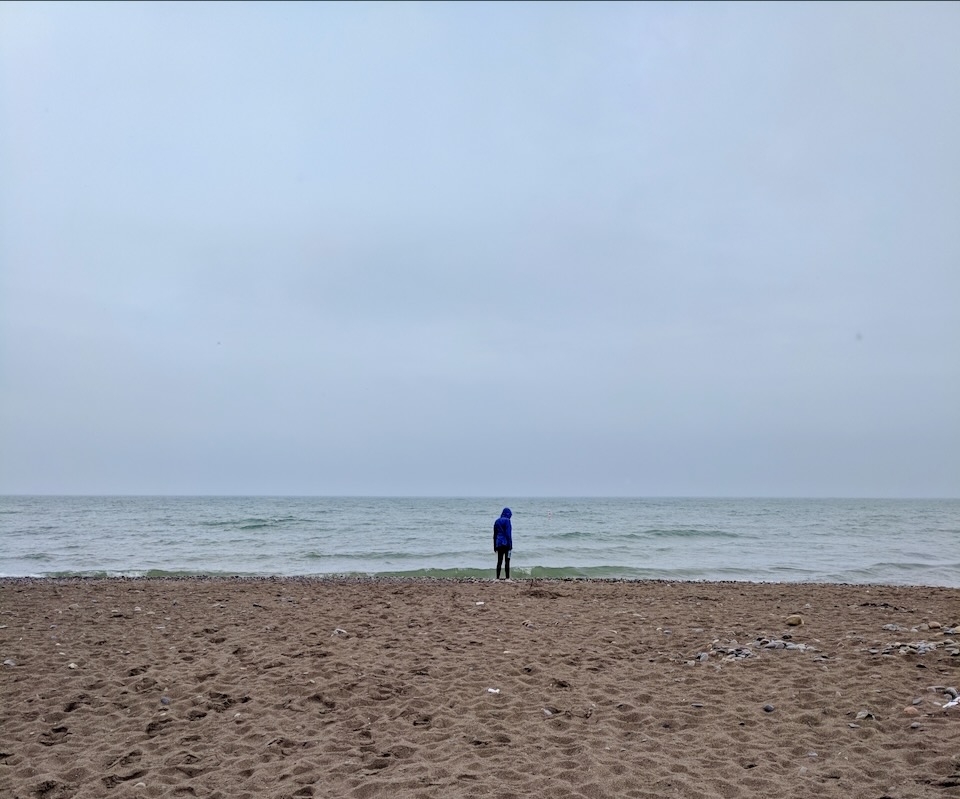
“HOMES” is the first acronym I remember learning in elementary school. It is the example I reach for when explaining mnemonic devices to my school-aged kids. But “HOMES” is much more important to me than a handy learning trick. For me, “HOMES” is home.
If aren’t aware, “HOMES” stands for the names of the five Great Lakes of North America - Huron, Ontario, Michigan, Erie, Superior. The lakes are the largest group of freshwater lakes on Earth by total area and the second-largest by volume. They contain 21% of the world’s surface fresh water. Traversing the shoreline of all the lakes would cover a distance roughly equivalent to travelling halfway around the world at the equator.
I grew up 17 miles from Lake Erie, my “home” lake. Going into Cleveland as a kid always meant two things: seeing the big buildings and seeing the lake. I would pick my seat in the family van so that I could be on the side with the lake view as we rolled down the I-90 Shoreway. There were windy autumn days when waves would crash into the breakwater, throwing spray high into the air; hot summer days when the lake would beckon with cool breezes and aquamarine water; frigid winter days when the white frozen surface of the lake would stretch to the horizon under a steel-grey sky. As a young child, I had never seen the ocean. Lake Erie became the ocean in my mind.
As I grew up and began my practice of taking long drives, I continued to be drawn to the lakes. I explored the entire southern shore of Lake Erie by the time I finished high school. Since then, I’ve visited large portions of all five lakes. A list of my favorite and most special natural places in the world read like a list of Great Lakes beauty spots - Mentor Headlands, New Buffalo, Oak Street Beach, Isle Royale, Scarborough Bluffs, the Straits of Mackinac, Door Peninsula.
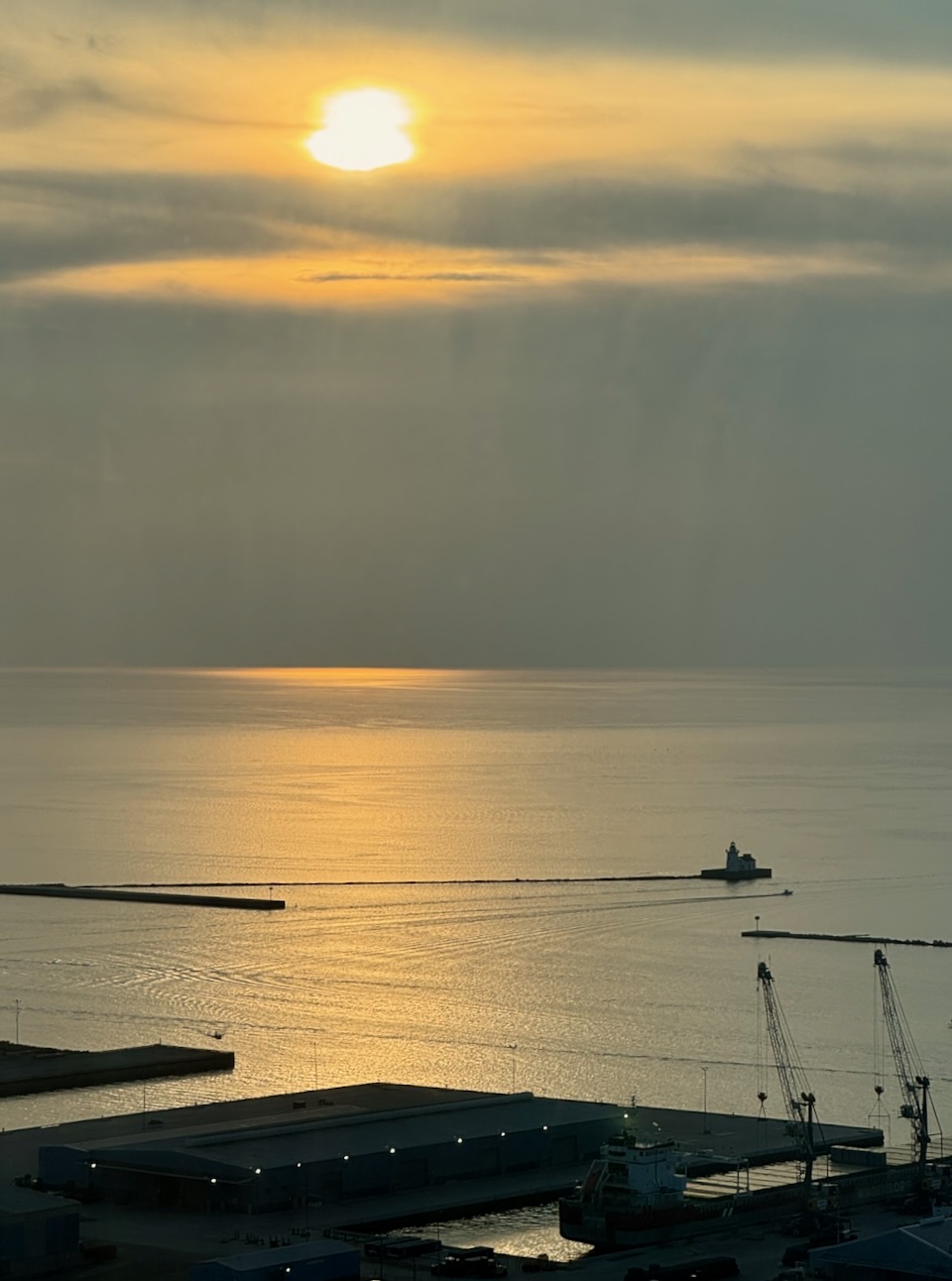
Now that I live in Virginia, I try hard to see at least one of them every year as a restorative pilgrimage. My last visit was just over a year ago along my 3,100 mile drive of I-90 from Boston, Massachusetts, to Seattle, Washington. On my first night, I planned a stay on the 23rd floor of the Hilton in downtown Cleveland, with a 180° view of Lake Erie. I stared at it for hours that evening until the sun set.
There’s a scene in the movie Braveheart where an Irishman named Stephen (played by David O’Hara) refers to Ireland has “his island”. When questioned about it, he replies, “Yeah, it’s mine”. If there’s any part of the Earth that I would consider “mine”, it’s these lakes. They’re mine.
Last week, the President of the United States, in a childish fit, signed an executive order “renaming” Lake Ontario to “Lake America”. Despite the charade of a formal signing ceremony, this carries little weight in the world. The United Nations Group of Experts on Geographical Names hasn’t approved this change. Yet Google Earth’s spineless parent company put the order into effect tout de suite (French intended).
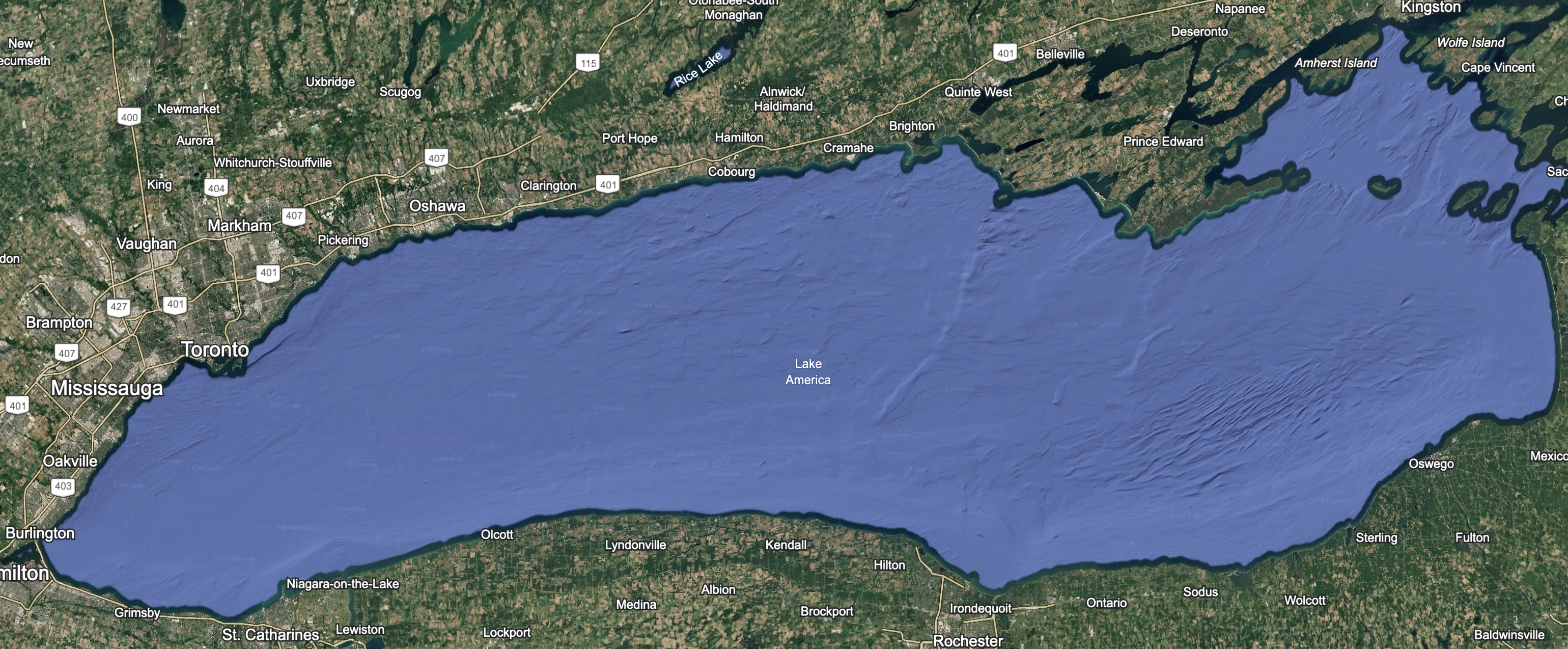
The Canadian provice of Ontario isn’t named after the lake, but the other way around. The lake’s name comes from the Wyandot word ontarí’io, meaning lake of shining waters. New York State, bordering the lake to the south, has both a town and county called Ontario. Interestingly, over 3000 miles away is the city of Ontario, California, which is named after the province of Ontario. I wonder what their toponymical future holds.
This isn’t the first time the current President has taken to renaming geographic features. Shortly after his inaguration in 2025, he signed an order to change the name of the Gulf of Mexico to the “Gulf of America”. Honestly, I was able to wave that act off as just more of the vapidity I expect from him. But - BUT - as I mentioned above, the Great Lakes are different. They’re mine.
Don’t worry, I am not going to dive into the details of US-Canadian trade policy or even the misguidedness of the President’s order. That’s not the post I set out to write. But I will say this: Four of the five Great Lakes (all except Lake Michigan) lie on the international border, and all five lakes exist as one coherent system stretching from the Dakotas to the Gulf of St. Lawrence. At the time, I was blissfully ignorant that the Lake Erie of my youth was dying from sewage waste, fertilizer runoff, and other pollution. All of the lakes experienced that to some degree in the latter half of the twentieth century. Canada played an equal role in preserving and protecting the lakes since then - to great effect! - and while they face new threats of the non-toponymical variety, I have been comforted that we have had such a strong partner with just as much stake in their health, beauty, and importance as the United States. Our neighbor to the north, for all of its other wonderful qualities, will always have the gratitude of this American.
The lakes are mine, but they’re also yours. They’re ours - American AND Canadian - and it’ll always be Lake Ontario 🇨🇦.